
How Much Is Enough?
This week: an essay about the treadmill you didn't know you were running on, 3 reads for your Sunday, and 10 new unicorns hiring right now.

☀️ In this issue: ✍️ An essay about chasing a finish line that keeps moving
📖 Antidoomscroll homework (4 reads, one about why lottery winners aren’t happier than you)
💼 10 new unicorns ($1B+ valuation) actively hiring
In my first year of creating content, I asked my sister how many followers someone would need to be considered a real content creator. She said 50,000.
I had thought, naively, that the answer was probably 10,000.
My dad was listening. He said, “I’m sure by the end of year one you will have 150,000 followers on Instagram.”
I should tell you something about my parents. They are extremely, delusionally proud of me. They think I can do anything. This is the kind of love that makes you feel invincible at seventeen and slightly embarrassed at twenty-five.
At the time of this conversation, I had never recorded a video. Not one. If you dig up my earliest attempts, they are so hazy and uncomfortable that I’ve had to bury them where nobody will find them(thank you archieve button).
150,000 was a fantasy.
My dad said it the way dads say things like “you could be Prime Minister” or “that boy wasn’t good enough for you.”
With total conviction. Zero evidence.
By January 4th, 2026, just about a year after I started, I hit that exact number. I was in Thailand with my family. The same people who’d been in the room when the number was first spoken out loud.
It felt wonderful….for about an hour.
By the next morning it was just a number on a screen.
Now I’m a little shy of 200,000. I’ll hit it. And I already dread hitting it, because I know what’s there.
Not the feeling I keep expecting. Just another number that will be extraordinary for sixty minutes and ordinary by breakfast.
“What are you talking about?”
Two psychologists named this in 1971. Philip Brickman and Donald Campbell. They called it the hedonic treadmill, and the metaphor does exactly what it needs to: you run, the belt moves, you stay in place.
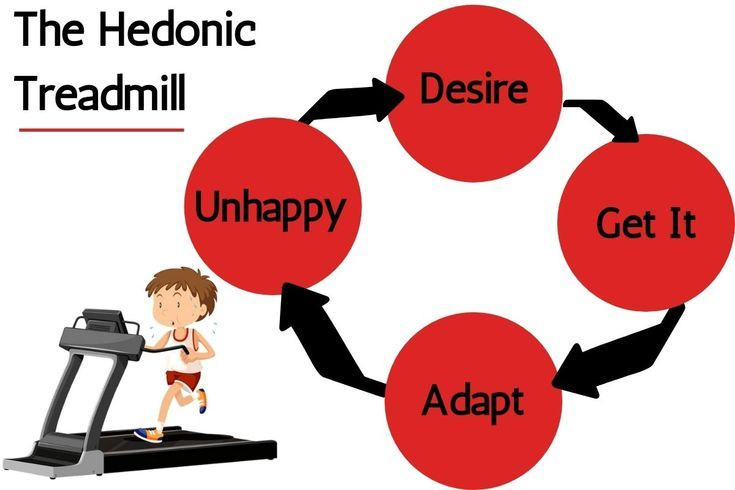
Their most famous study compared lottery winners to people who had survived serious accidents. Within a year, both groups had drifted back to roughly the same level of happiness they’d reported before the event happened to them. The lottery winners, these people with sudden millions, new houses, new everything, were no happier than a control group twelve months later.
I think about this study the way you think about a fact that offends you personally. Because it means the thing I keep believing, that the next milestone will change how I feel, has been disproven by half a century of evidence, and I keep believing it anyway.
And while we are at it…knowing about the treadmill does not get you off it. It just makes you a more informed runner.
I was asking one of my friends yesterday about the three things that would make her happier.
Her answers were the obvious three:
1. Losing weight
2. Finding a partner
3. Making more money
The reality is, there is never going to be enough of any of these three. Well, potentially number 2, but then you will always have other people in relationships to compare your love against.

I want to try to explain what I think is going on.
Your brain wants things. That’s its primary function. Not feeling things. Wanting them. Dopamine, the chemical everyone calls the “pleasure chemical,” doesn’t actually produce pleasure. Robert Sapolsky, the Stanford neuroendocrinologist who has spent forty years studying this, puts it plainly: dopamine is about the anticipation of reward, not the reward itself. The buzz is in the reaching. The moment you close your hand around the thing, the buzz relocates to something you haven’t reached yet.
This is why you can want something desperately for six months, get it, and feel flat by week three. Your neurochemistry was never building toward satisfaction. It was building toward more wanting. The system runs on craving the way a car runs on fuel. Take away the craving and the whole thing stops. Evolution didn’t design you to be happy. It designed you to keep going.
The contemplatives figured this out long before the neuroscientists got their imaging equipment.
The Buddha called it tanha. Thirst. The kind that returns the moment you swallow.
Arthur Schopenhauer, the great German pessimist who somehow managed to be right about almost everything, described human existence as swinging between pain and boredom, with desire as the engine that moves us between the two.
Byung-Chul Han, the Korean-German philosopher I keep quoting in this newsletter because nobody says it sharper, calls it the achievement-subject: a person who has become their own taskmaster, who drives themselves harder than any employer could, because the whip is internal now.
So what do you do when the machinery of wanting is built into you at the cellular level?
I’ll be honest. I don’t know. The self-help version, “just be grateful!,” has always felt like telling someone with insomnia to just relax. Correct in theory. Useless in practice.
But there’s a word I keep coming back to. It comes from the research literature and it sounds incredibly boring, which is how you know it might actually work.
The word is savouring.
Fred Bryant, the psychologist who coined the term, defines it as the deliberate act of attending to a positive experience while it’s happening. Not documenting it. Not comparing it. Not placing it on a timeline of progress. Just being in it with your full attention for slightly longer than you normally would.
I was in Thailand when I hit 150,000. The air was warm and heavy in the way tropical air is, where it almost has a texture. My sister was laughing about something unrelated. A prediction made in a living room had come true, down to the number, in the exact timeframe. If I had stayed inside that moment, really stayed, I think it might have been one of the best evenings of my life.
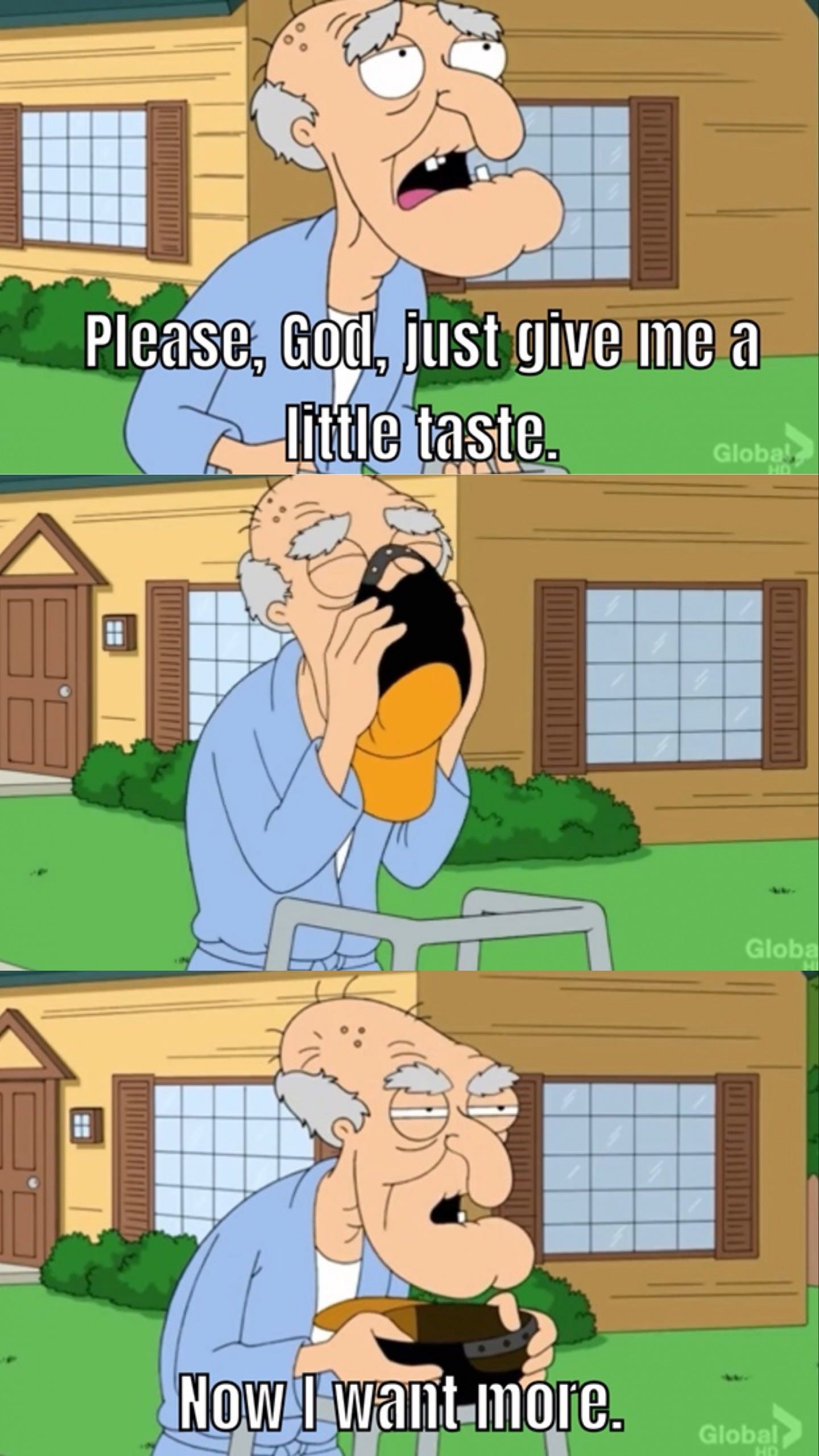
I didn’t stay. I was calculating the distance to 200,000 before dinner.
John O’Donohue, the Irish poet and philosopher, wrote that “one of the greatest sins is the unlived life.” I used to think that meant not taking enough risks. I think now it might mean something closer to: not being present for the life you already have.
Here are four things I’m trying. I offer them not as advice but as field notes from someone who is bad at this and trying to get slightly less bad.
I say “today was enough” before I fall asleep. Not good, not productive, not exceptional. Enough. The word pushes back against a brain that always wants to add to the list.
I ask myself, once a week or so, what I would be devastated to lose. The answers are always the same. My health. The people I love. The ability to write. The morning light in my flat before the day starts. None of the answers have ever been a number. None of them have ever been anything I am currently chasing. That gap between what I chase and what I’d grieve tells me something I keep having to relearn.
When I want something badly, I run it through 10-10-10. Will this matter in 10 days? 10 months? 10 years? If the answer at 10 years is no, the urgency loosens a little. Not much. Enough.
And I try, once a day, to stay inside a good moment for three extra seconds. The first sip of coffee while it’s still too hot. Sun on my arms. A voice note from a friend that makes me laugh before I’ve even finished it. I don’t write it down. I don’t post it. I just let my attention stay for a beat longer than it wants to.
Three seconds. It’s not much.
It’s more than most of us give any moment on most days.
I don’t know how much is enough. I’m starting to think the question itself is a trap, because “enough” implies a destination, and the whole point of the treadmill is that there isn’t one.
If you get the thing, stay in the getting of it. Not forever. You can chase again tomorrow. But give it more than an hour. Give it at least a day. Be in the room with the people who were in the room at the beginning.
It might be more than you think.
It usually is.
📖 Antidoomscroll Homework
3 reads. One about why lottery winners aren’t happier than you, one from a Stanford neuroscientist on how wanting works, one from the ancient Greeks on what the good life actually means, and one that’s just a beautiful thing to read in bed.
Dear reader who just got the thing and already wants the next thing, Read this: “How to Escape the Hedonic Treadmill and Be Happier” (Positive Psychology). The section on why varying your experiences matters more than accumulating new ones will change how you plan your weekends.
Dear reader who wants to understand wanting the way a scientist does, Read this: “How to Measure Happiness: Hedonia vs. Eudaimonia” (Big Think). Aristotle argued that the good life isn’t about feeling good. It’s about living well. He said this 2,400 years ago and nobody has improved on it.
Dear reader who needs something beautiful before Monday, Read this: “Why Broken Sleep Is a Golden Time for Creativity” (Aeon). Before electric lighting, humans slept in two shifts and used the middle hours to think, write, or talk to the person next to them. We traded an entire creative window for eight unbroken hours. This essay will make you want it back.
🤯 Genspark for job search
During this week, I created this job search system using Genspark. As promised, here is the document with free credits for you to set it up for yourself.
💼 New Unicorns ($1B+ Valuation) — Now Hiring
Ten companies that just hit billion-dollar valuations. All hiring.
🇩🇪 NEURA Robotics — cognitive robotics (Munich / Zurich)
🇩🇪 STARK — defence systems (Munich / Berlin / Kyiv)
🇫🇷 AMI — Advanced Machine Intelligence (Paris / NYC / Singapore)
🇫🇷 Harmattan AI — autonomous defence drones (Paris / Lausanne / DC)
🇪🇸 Fundamental — foundation models (Bay Area / Barcelona / EU remote)
🇮🇳 Neysa — AI acceleration (Mumbai / Bangalore)
🇮🇳 JUSPAY — payments operating system (Sao Paulo / Bangalore / Dubai)
🇮🇱 Upwind Security — cloud security (Tel Aviv / Belfast / US remote)
🇦🇷 Ualá — payments and investing app (Argentina / Mexico)
🇺🇸 Midi Health — virtual midlife women’s care (Bay Area / LA / US remote)
Midi Health: a billion-dollar company built around menopause and midlife women’s health. That didn’t exist five years ago. Watch what gets funded. It tells you where the world is going.
✉️ Dear Gentle Reader,
Sunday evening. I wrote an entire essay about not chasing numbers and I already know I’ll check my follower count before bed. The wiring runs deep.
If you tried the subtraction question while reading this, I’d genuinely love to hear what came up. Reply to this email. I read every one. (That’s not a growth hack. I just like talking to you.)
See you Tuesday. We’re rating every productivity hack I’ve ever tried. Bullet journals. Notion. The 5 AM club. Pomodoro. All of it. Honestly. If you’ve ever spent more time setting up your productivity system than actually being productive, that one’s for you.
— Aditi x
If this resonated, send it to someone who’s been chasing and hasn’t looked around in a while. Then go give something three extra seconds of your attention.
Pretty Ambitious. Every Tuesday and Sunday.
Also, while we’re at it, if you do reply to this, I will respond to you. Love you!