
If You're Still Using One AI Tool for Everything, We Need to Talk
An honest guide to which AI tools to use when, a deep dive into Claude (the one nobody talks about but everyone should), and the reads that will make you feel less lost in the AI noise.

☕ In this issue:
✍️ A no-nonsense guide to AI tools that cuts through the noise
🤖 A deep dive into Claude, the AI tool I think you’re sleeping on
📖 Antidoomscroll homework (4 reads, one that will genuinely change how you work
💼 10 companies hiring right now across London, Europe, and remote
If we were sitting in a cafe right now (I’m at Watchhouse in Marylebone if you’re wondering, the patries are extraordinary), I’d want to show you something on my laptop.

Not a productivity hack. Not a “10x your output” thread.
I’m suspicious of those.
I’d want to show you the actual tools I use every single day to run my business, write my content, manage my partnerships, and generally keep my life from descending into beautiful chaos.
Because here’s the thing nobody tells you about AI tools: there are now hundreds of them. Every single week a new one launches claiming to “change everything.” Most of them won’t. But a handful of them have genuinely shifted how I work, and I think they’d shift how you work too.
So here. Imagine I’ve got my laptop open. You’ve got your oat milk latte (or matcha, iykyk). Let me walk you through it.
You Don’t Need Every AI Tool. You Need the Right Three or Four.
I need you to hear this first because the AI discourse online is genuinely unhinged right now.
You do not need to try every new tool that launches. You do not need to watch a 47-minute YouTube tutorial on an app you’ll use twice. You do not need to feel behind because someone on Twitter (sorry, X, I will never get used to that) is posting about their “AI stack” like it’s a personality trait.

You need to understand which type of tool does what, pick the ones that match how you actually work, and ignore the rest.
Here’s how I think about it.
(I’m going to keep this embarrassingly simple because I think that’s what’s actually useful. If you want the technical deep dive, there are a thousand blogs for that. This is the “explain it to me like I’m your smart friend who hasn’t had time to figure this out yet” version.)
For Quick Questions and Everyday Stuff: ChatGPT
You probably already use this one. It’s fast, it’s conversational, it’s connected to the internet. If you need a quick answer, a brainstorm partner, or help drafting a message to your landlord that’s firm but not aggressive (we’ve all been there), ChatGPT is solid.
Think of it as your general-purpose assistant. The one you text twelve times a day about random things. It’s not the best at any one thing, but it’s good at almost everything.
For Research and Fact-Finding: Perplexity
Perplexity is what Google should have become. You ask it a question, it gives you a sourced answer with actual citations. Not ten blue links. Not ads. Not a Reddit thread from 2019. An actual, referenced answer.
I use it every time I need to research something properly. Brand information before a partnership call, immigration policy details (timely, I know), market data for a pitch. It saves me hours every single week.
(If you’re a student reading this, Perplexity for your research is genuinely going to change your life. You’re welcome.)
For Workflows and Integrated Tools: GenSpark
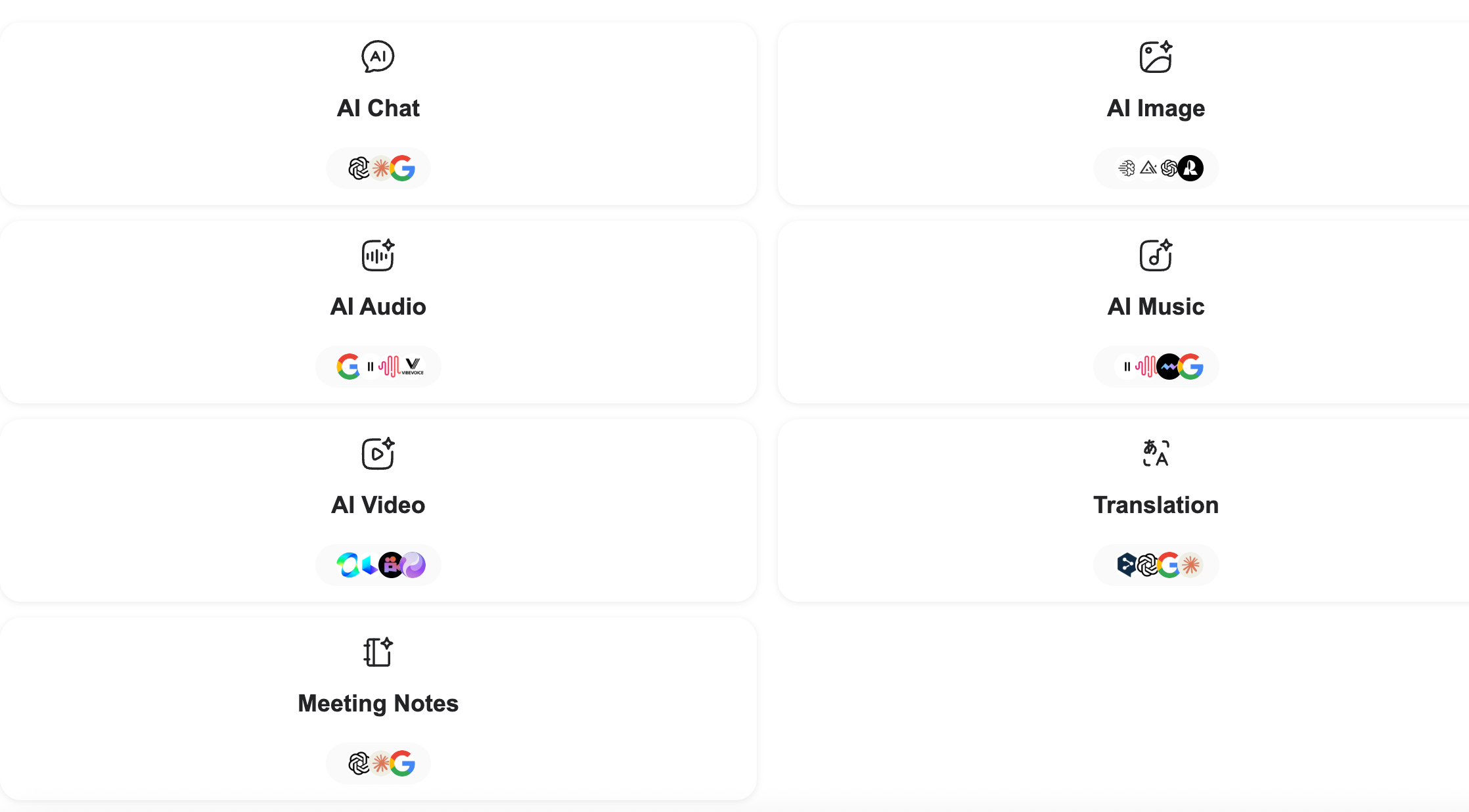
GenSpark is the newer kid that I think is being massively slept on. It combines AI slides, sheets, a developer tool, workflows, and now meeting bots into one workspace. So instead of juggling five different AI tools, you do it all in one place.
I’m working with them right now (yes, that’s a disclosure, but I genuinely use the product regardless) and the 3.0 version they just launched is a proper step up. The workflow automation alone saves me from the repetitive tasks that make me want to throw my laptop into the Thames.
For Deep Thinking, Long Writing, and Complex Work: Claude
OK, this is the one I actually want to spend time on. Because I think Claude is the most underrated AI tool available right now, and most people haven’t even tried it.
Let me explain.
Why Nobody Talks About Claude (and Why That’s About to Change)
Claude is made by Anthropic. They don’t have the flashiest marketing(or maybe they do?). They don’t have the memes. They don’t have the CEO posting cryptic tweets at 2am (looking at you, Sam).
But here’s what they do have: the best AI for actually thinking.
(I know that sounds like a weird claim. Bear with me.)
Where ChatGPT sometimes gives you the first plausible-sounding answer, Claude tends to reason through problems more carefully. It’s less likely to confidently make things up. And if you’ve ever had ChatGPT hallucinate a fake statistic at you with the confidence of a man at a dinner party, you know why this matters.
For anything where accuracy matters (research summaries, financial analysis, reviewing a contract before you sign it, understanding your visa options when the UK government decides to change everything overnight), Claude is just... better at thinking before it speaks.

Claude Handles Long Documents Like Nothing Else
You can give Claude an entire 100-page PDF. A full report. A long email thread from a brand negotiation where you’ve lost track of what was actually agreed. And it will read, understand, and respond to the whole thing.
This is a genuine game-changer if you work with long-form content, legal documents, or research papers. I use it to review partnership contracts before they go to my lawyer. It catches things I would absolutely miss.
(No, it doesn’t replace a lawyer. But it means I go to my lawyer with better questions. Which saves me money. Which makes me happy.)
Claude Writes Like a Human
The writing quality is noticeably different. Less robotic, more natural, better at matching your tone.
If you’re a creator, writer, or anyone who needs polished prose that doesn’t sound like it was generated by a machine, this matters enormously.
The Claude Family: Chat, Code, Cowork and Yes, You Should Try All of Them
Here’s where people get confused. Claude isn’t just one thing. It’s a family of tools, and I think you should know about all of them even the ones that sound “technical.” Especially those, actually.
Claude Chat is where you start. Go to claude.ai, sign up for free, and have a conversation. But please don’t just ask it to write you a poem. Ask it something real.
Here’s what I mean by real:
“Here’s a job description I’m applying for and here’s my CV. What gaps should I address in my cover letter?”
“I’m negotiating a salary of £45,000 but I think I’m worth £55,000. Role-play as the hiring manager and let me practice the conversation.”
“Here’s a 30-page PDF of my tenancy agreement. Are there any clauses I should be worried about?”
“I have £5,000 in savings and I don’t know what to do with it. Walk me through my options like I’m 25 and have never invested before.”
That’s Claude Chat. It’s your thinking partner for anything that requires actual thought.
Claude Code sounds scary. It’s not. And I need you to hear me on this.
(Yes, it’s called “Code.” Yes, it runs in your terminal. No, you do not need to be a software engineer to benefit from it.)
Here’s what I actually use Claude Code for and I am very much not an engineer:
I asked it to build me a spreadsheet that automatically tracks all my brand partnerships, payment statuses, and deadlines. I described what I wanted in plain English. It built it.
I asked it to create a script that downloads all my Instagram analytics into a weekly report. I didn’t write a single line of code. I just told it what I needed, and it figured out the how.
I asked it to set up automations for my email workflow sorting inbound partnership enquiries by type, flagging the ones that match my rate card, drafting initial responses. I described the logic in my own words.
The point is: Claude Code isn’t “for developers.” It’s for anyone who has a repetitive task, a messy system, or an idea for something that should exist but doesn’t. You describe what you want. Claude builds it. You don’t need to understand the code you need to understand your problem.
If you’ve ever thought “I wish there was an app that did [specific thing]” Claude Code can probably build it for you in an afternoon.
Ask it to do one thing that currently takes you an hour every week. Watch what happens.
Claude in Chrome and Cowork are the newest additions, and honestly, they feel like a glimpse of where everything is heading.
Claude in Chrome is literally Claude inside your browser. It can read web pages for you, fill in forms, extract information from websites, compare products anything you’d normally do manually while clicking through twenty tabs.
Cowork is Claude working directly with files on your computer. Need a presentation built? Tell Claude what you want, and it creates the slides. Need a spreadsheet cleaned up? Drop it in and describe what’s wrong. Need a PDF summarised? Done.
The practical takeaway: don’t let the names intimidate you. Start with Claude Chat today. Try describing a real problem to Claude Code this week. And explore Cowork when you want Claude to actually create things for you, not just talk about them.
The people who will thrive in the next five years aren’t the ones who learned to code. They’re the ones who learned to talk to AI properly.
And that’s a skill anyone can develop starting right now.
The Bottom Line
You don’t need every AI tool. You need the right ones for how you actually work.
My personal stack: Claude for thinking and writing, ChatGPT for quick tasks and browsing, Perplexity for research, GenSpark for the integrated workspace stuff. Also Spinnable (but that is whole different conversation for another day because right now, I feel like gatekeeping a teeeeeeny bit).
But if I had to pick just one? Claude. It’s the tool that’s made the biggest difference to the quality of my work. And I think by the end of a week using it, you’ll feel the same.
Then come back and tell me how it went. I genuinely want to know.
(lol this is not sponsored by anthropic but if someone from their team is reading this and want to send me , I will be VERY pleased 😁. thank you.)
📖 Antidoomscroll Homework
Dear reader who feels overwhelmed by AI and doesn’t know where to start, Read this: “Why AI Isn’t Going to Take Your Job (But Someone Using AI Might)” Not because it’ll fix the anxiety. But because it reframes the whole conversation from fear to agency. That reframe matters more than any specific tool.
Dear reader who is working 12-hour days and calling it “hustle,” Read this: “How to Do Nothing” by Jenny Odell. It’s about why doing less, strategically, often produces more than doing everything frantically. It’s the essay I reread every time I catch myself confusing busyness with progress.
Dear reader who wants to understand why some people just seem to make things happen, Read this: “High Agency” by George Mack. It’s short. It’s direct. It will reframe how you think about every obstacle in your life. (And yes, this is a teaser for next week’s essay. I’m not subtle.)
Dear reader who needs to smile for ten minutes, Go watch a video of someone discovering Claude for the first time and watching it analyse their entire business in 30 seconds. The facial expressions are priceless. The future is weird and wonderful.
💼 10 Companies Hiring Right Now
Freshly funded. Interesting work. Across the UK, Europe, and remote. Your next chapter might start with one of these.
🇬🇧 Monzo — fintech (London)
🇬🇧 Wise — international payments (London / Remote)
🇩🇪 N26 — digital banking (Berlin)
🇪🇸 Factorial — HR tech (Barcelona / Remote)
🇳🇱 Miro — visual collaboration (Amsterdam / Remote)
🇬🇧 Anthropic — AI safety (London / San Francisco)
🌍 Notion — productivity (Remote)
🇬🇧 Revolut — fintech (London / Global)
🇦🇺 Canva — design tech (Sydney / London)
🇬🇧 Paddle — payments infrastructure (London)
Know someone job hunting? Forward this to them. It might be the most useful thing in their inbox this week.
Dear gentle reader,
If this helped you feel even slightly less lost in the AI noise, send it to someone else who’s been meaning to “figure out AI” for months. This is the issue that makes it click.
And if you’re not subscribed to Pretty Ambitious yet, this is the only newsletter that will explain Claude and quote Seneca in the same month. It’s free. It’s honest. And it will never make you feel stupid for not knowing something.
Avec Amour,
Aditi ❤️
Truly appreciated the AI tool breakdown, especially learning how you've used Claude Code because I just installed it yesterday and hadn't had a chance to play around with it yet.