
Joymaxxing for Dummies
This week: an honest essay about chasing joy when you don’t have the answers, 4 reads to make your weekend better, and 29 companies that just raised $50-100M and are hiring right now.

☀️ In this issue:
✍️ An essay about joymaxxing
📖 Antidoomscroll homework (4 reads, one of them will change how you think about boredom)
💼 20 companies that just raised $50-100M and are actively hiring across the board
The title of this article is misleading.
You are (probably) not a dummy. (In fact, if you’re reading about tech careers, personal finance, this kind of stuff on the internet, you are most likely a highly ambitious person and potentially very smart)
The title assumes that I actually know the answer to how to joymax. (I do not).

(I can’t be the only one happy about the Hannah Montana 20 year celebrations?)
So think of this less as a guide and more as a field report from someone who recently Googled “how to be happier” at 11 PM on a Tuesday and ended up in a rabbit hole about ancient Greek philosophy, dopamine receptors, and a TikTok trend called joymaxxing that made her feel both seen and slightly attacked.
What Even Is Joymaxxing
If you’ve been on TikTok recently (or even if you haven’t, because these things have a way of seeping into the cultural water supply), you may have encountered the word “joymaxxing.” It comes from the same internet lineage as looksmaxxing and softmaxxing, which are Gen Z terms for optimising various aspects of your life to their maximum potential.
Joymaxxing is exactly what it sounds like: intentionally maximising the amount of joy in your daily life.
Which sounds simple. Almost silly in its simplicity.
Like telling someone who’s drowning to just swim.
But here’s why I think it’s worth sitting with: most of us have accidentally built lives optimised for productivity, not joy. We’ve optimised our mornings, our calendars, our inboxes, our meal prep, our reading lists. We’ve optimised the work. We’ve forgotten to optimise the feeling.
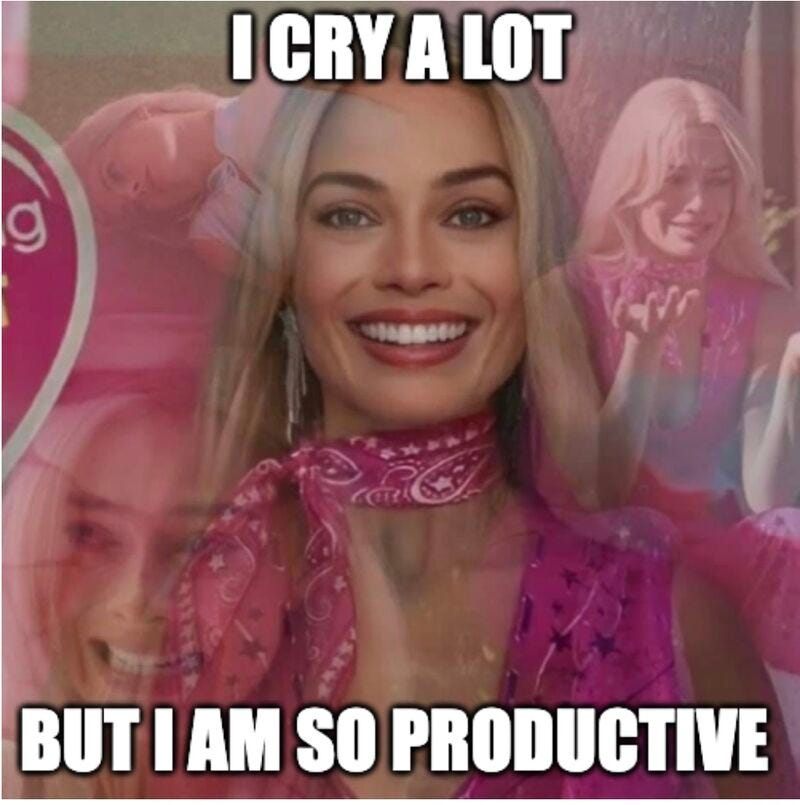
When was the last time you did something purely because it made you happy? Not because it was productive, not because it would look good on Instagram, not because it was a “self-care ritual” you read about in a newsletter (the irony of writing this in a newsletter is not lost on me). Just because it felt good.
If you had to think about it for more than three seconds, this essay is for you.
The Joy Audit
I tried something last week. I called it a joy audit, which sounds corporate and terrible, but stay with me.
For three days, every time I felt a genuine spark of happiness (not contentment, not satisfaction, actual joy, the kind where your chest opens up a little), I wrote down what I was doing. Here’s what I found:
Walking with no destination and no podcast. Just walking.
Sending a voice note to a friend that was six minutes long and entirely unhinged.
Reading a book in a cafe and looking up to realise an hour had passed.
Going to an AMUSEMENT PARK!!! I LOVE THORPE PARK SO MUCH!!!

.Texting someone “this reminded me of you” and meaning it
Notice what’s not on the list: nothing about work, nothing about achievement, nothing about content, nothing about my phone (except the voice note). The things that brought me joy were all small, all slow, all fundamentally analog. They were all things that a productivity guru would call a waste of time.
That’s the point.
Why We’re Bad at This
Here’s my theory( and I’m borrowing heavily from people smarter than me) so bear with me.
We’re bad at joy because we’ve been trained to chase happiness instead. And happiness and joy are not the same thing.
Happiness is a state.
It’s the feeling you get when something goes right. You get the job, you feel happy. You hit the target, you feel happy. It’s reactive. It’s conditional. And it’s temporary, because the thing about conditions is that they change.
Joy is different. Joy is closer to what the positive psychologists call “savouring,” the act of deliberately paying attention to a positive experience while it’s happening. It’s not about the experience being extraordinary. It’s about your attention being fully inside it.

(extremely niche reference, if you know what this is please reply to this mail lol)
The Japanese have a concept called ikigai, which is sometimes translated as “reason for being” but is closer to “the thing that makes you get up in the morning.” For most people, ikigai isn’t their job or their big goals. It’s small things. The morning coffee ritual. The garden. The conversation with a neighbour. Joy lives in the ordinary. We just forget to look.
The Neuroscience Bit (I Promise This Is Quick)
Your brain has reward pathways that release dopamine, serotonin, and oxytocin when you experience joy. Dopamine is the one everyone talks about (it’s the “want more” chemical), but serotonin and oxytocin are the ones that matter here. Serotonin is linked to mood stability and contentment. Oxytocin is linked to bonding and connection.
Here’s the interesting part: dopamine spikes when you achieve something or scroll something novel. Serotonin and oxytocin increase when you savour something or connect with someone. Which means the activities that make you joyful are biologically different from the activities that make you stimulated.
Scrolling TikTok? Dopamine. Walking with a friend and laughing about nothing? Serotonin and oxytocin.
The joymaxxing crowd on TikTok is accidentally getting at something neurochemically real: if you want to feel better, you don’t need more stimulation. You need more savouring.
My (Very Imperfect) Joymaxxing Attempt
I’m not going to give you a ten-step framework because I genuinely don’t have one. But here’s what I’ve been trying this month, imperfectly and inconsistently, and what seems to be working:
The one-joy-a-day rule. Every day, I do one thing that exists purely for joy. Not for productivity, not for growth, not for content. Just for the feeling. Some days it’s a twenty-minute walk. Some days it’s buying flowers. Some days it’s watching a terrible reality show and refusing to feel guilty about it.
The phone down experiment. I’ve been leaving my phone in another room for the first hour after I wake up and the last hour before I sleep. The mornings are calmer. The evenings are longer. I’m not going to pretend I do this every day, but on the days I do, I notice.
The joy inventory. Instead of a gratitude journal (which has always felt performative to me, sorry), I’ve been keeping a running list of things that made me feel genuinely joyful. Not grateful. Joyful. The distinction matters. Gratitude is “I appreciate this.” Joy is “this made me feel alive.” It’s a higher bar, and hitting it less often makes it more honest.
The “for no reason” test. Before I do something, I ask: would I still do this if nobody knew? If nobody saw? If it never went on Instagram, never became a story, never contributed to any version of my life that other people see? If the answer is yes, it’s probably joy. If the answer is no, it might be performance.
What I Don’t Have Figured Out
Most of it, if I’m honest.
I still check my phone too much.
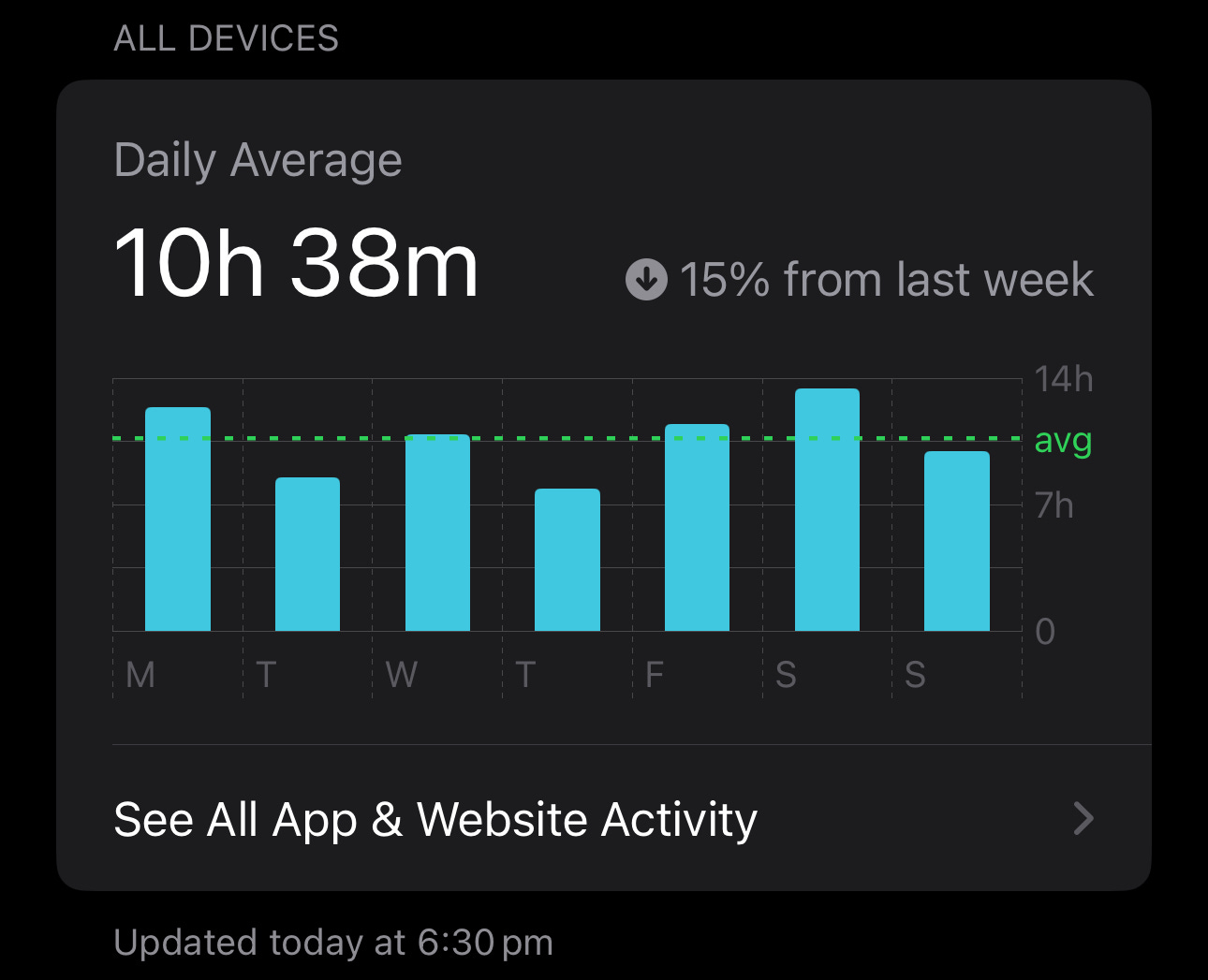
(hey the -15% is a win, ok?)
I still confuse productivity with meaning. I still have weeks where I’m so busy optimising that I forget to actually live. I still feel guilty when I do something unproductive, which is itself a sign of how deep the programming goes.
But I think that’s the point. Joymaxxing isn’t a destination. It’s a practice. And like all practices, it works best when you stop trying to be perfect at it and just keep showing up, imperfectly, consistently, with your phone in the other room and your chest a little more open than it was yesterday.
You don’t need to have it figured out. You just need to start noticing what makes you feel alive. And then do more of that.
(I told you I didn’t have the answers.)
📖 Antidoomscroll Homework
Four reads. One about the science of savouring, one about the Japanese art of finding meaning in small things, one about why your brain is wired for negativity (and how to hack it), and one that’s just delightfully odd.
Dear reader who just realised they haven’t done something purely for fun in weeks, Read this: “The Joymaxxing Trend Could Actually Improve Your Life” (Refinery29). It breaks down the neuroscience behind why intentionally seeking joy works and why it’s not just another wellness fad. Short, practical, and it’ll make you want to go for a walk.
Dear reader who finds gratitude journals insufferable but still wants to feel better, Read this: “How to Escape the Hedonic Treadmill and Be Happier” (Positive Psychology). Based on actual research, not vibes. It explains why the promotion/raise/achievement high always fades and what the science says about building lasting wellbeing instead. This is the article that sent me down the rabbit hole.
Dear reader who wants to understand happiness like a philosopher, not a life coach, Read this: “How to Measure Happiness: Hedonia vs. Eudaimonia” (Big Think). A clean, accessible breakdown of the difference between pleasure and flourishing, and why Aristotle was right 2,400 years ago that the good life isn’t about feeling good. It’s about living well. Five minute read, three day thought spiral.
Dear reader who needs something beautifully weird, Read this: “Why Broken Sleep Is a Golden Time for Creativity” (Aeon). Before electric lighting, humans slept in two phases and woke up in the middle of the night to think, write, or talk. We lost an entire creative window. Read this one at 11 PM with the lights low and nothing to do tomorrow morning.
💼 Companies That Just Raised $50-100M (Now Hiring)
These aren’t scrappy seed-stage startups. These are companies that just convinced investors to write very large cheques. All 29 are actively hiring across the board. Your next role might be on this list.
🇬🇧 UK & Europe
Profound — AI search visibility (London / NYC / Bay Area / Buenos Aires)
Encord — multimodal AI data (London / Bay Area)
Aalyria — network orchestration (London / US remote)
Dwelly — property management (London / UK remote)
Isembard — distributed manufacturing (London / Dallas / Hamburg)
ORO Labs — procurement orchestration (US remote / UK / Canada)
🇮🇳 India
IDfy — identity verification (Mumbai)
Axiamatic — enterprise transformation (Bangalore)
🌍 US & Remote
Ostro — personalized healthcare (US remote)
Hydra Host — bare metal GPU infrastructure (Miami / US remote)
BreezeBio — genetic medicine delivery (Bay Area)
Braintrust — AI observability (Bay Area / NYC / Seattle)
Jump — AI for financial advisors (US remote)
Eight Sleep — intelligent bed cooling (Bay Area / NYC / Remote)
Freeform — AI-native metal 3D printing (LA)
Novig — sports prediction market (NYC)
Guidde — AI video documentation (NYC / Tel Aviv)
Render — cloud production (Bay Area / US remote / Canada)
Nominal — hardware test operations software (LA / Austin / NYC)
Nitra — healthcare finance (NYC / DC / Taipei / Seoul)
Know someone job hunting? This is the most useful thing you can forward them this week. 20 companies. $50-100M each. All hiring.
Dear Gentle Reader,
If this resonated, send it to someone who’s been optimising everything except their happiness. Share it. Restack it. Then go do something for no reason.
Also the next couple of days are dedicated to sorting out my ISAs. I will teach you HOW you can start investing and HOW you form your investment thesis, will share how I am constucting my own portfolio…maybe even share a free stock tbd tbd 👀👀
Hope you have a great week ahead & see you on tuesday!
Avec amour,
Aditi
oh yes someone said the j word
https://jillbolg.blogspot.com/2026/04/if-my-life-was-and-rom-com-i-still.html
I hope you may like it and enjoy it